



Standing Together for Life: A Hopeful Day at the United Nations
Anyone who has followed Campaign Life Coalition’s work at the United Nations knows that it can often be discouraging for pro-life and pro-family advocates. Year after year, we attend UN commissions where abortion is promoted under terms like “sexual and reproductive health and rights,” and where the protection of unborn children is often absent from conversations supposedly centred on human rights.
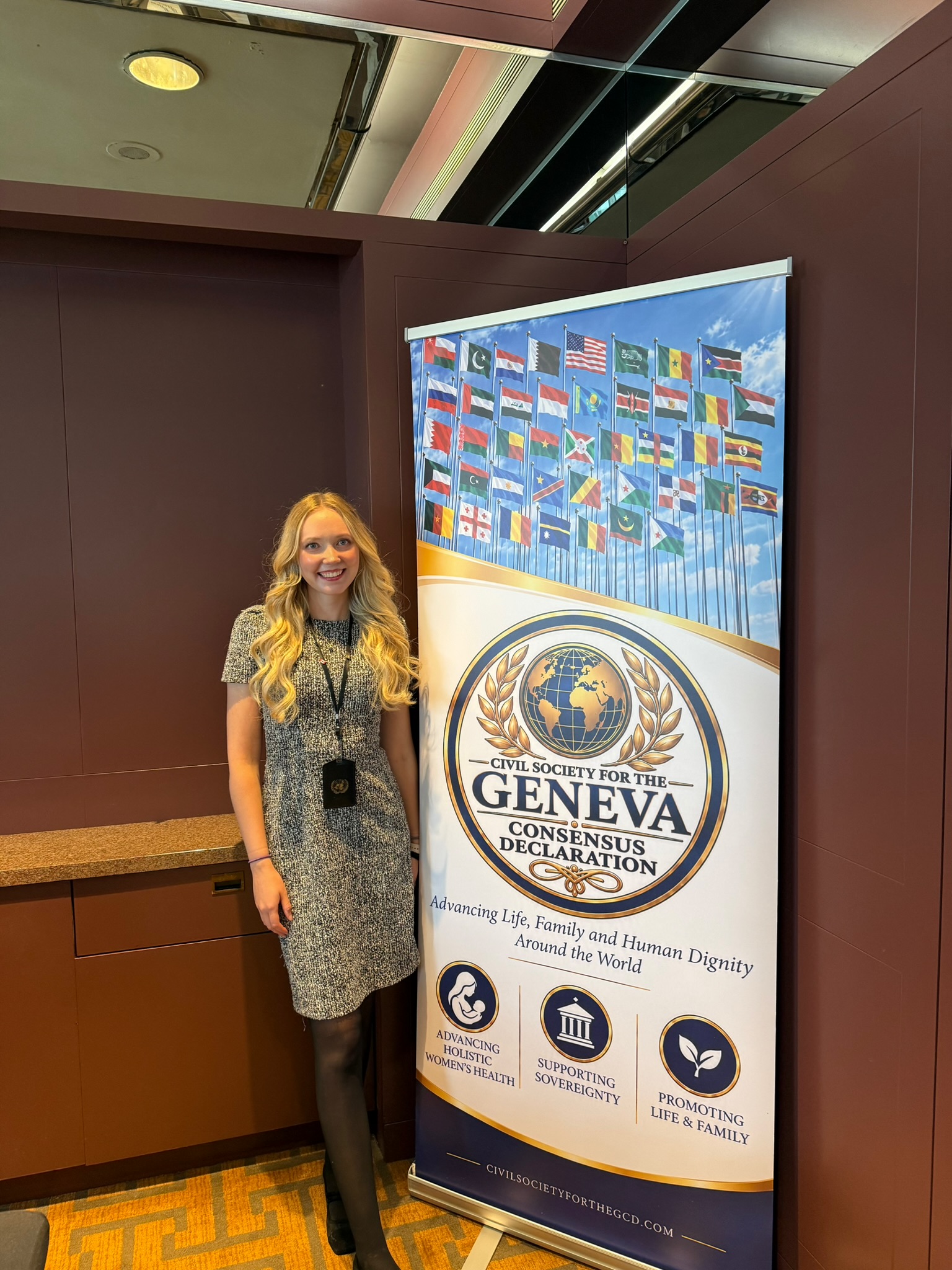
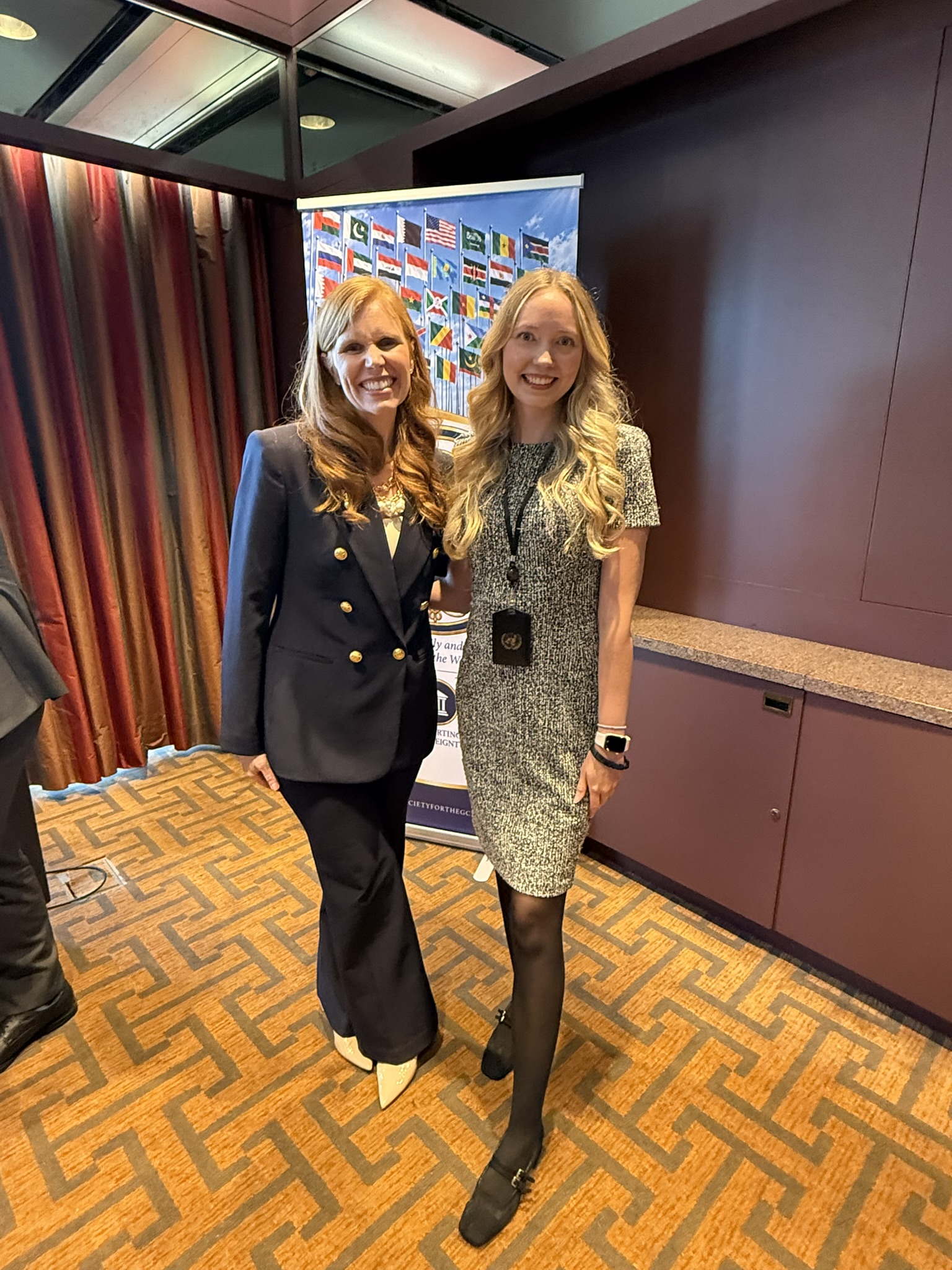
This week, however, my experience in New York was very different. On September 23, I had the opportunity to represent Campaign Life Coalition at Women’s Health and Protection of the Family, an event held across the street from United Nations Headquarters during the 81st session of the United Nations General Assembly. Campaign Life Coalition was proud to be one of the civil society organizations co-sponsoring the event. Instead of listening to countries discuss how to expand abortion around the world, I had the privilege of sitting in a room filled with representatives from countries willing to stand together for life, women and the family.
The Geneva Consensus Declaration (GCD) was established in 2020 as an international coalition centred around four important objectives: securing meaningful health and development gains for women, protecting human life at all stages, defending the family as the fundamental unit of society, and upholding national sovereignty. For pro-life advocates, one of the Declaration’s most important affirmations is that there is no international right to abortion and no international obligation for countries to finance or facilitate abortion.
That matters enormously at the United Nations, where abortion is frequently promoted as part of “sexual and reproductive health and rights.” The Geneva Consensus Declaration gives countries that reject the idea of abortion as an international right a way to find one another, coordinate their efforts and defend their national sovereignty together.
The coalition already included more than 40 countries from around the world going into Wednesday’s gathering. The diversity of those nations was impossible to miss. Countries with vastly different cultures, histories, religions and political systems were sitting in the same room because they had found important principles on which they could stand together. The official program included representatives of the United States, Argentina, Egypt and Hungary, along with diplomats from other GCD countries and members of civil society.
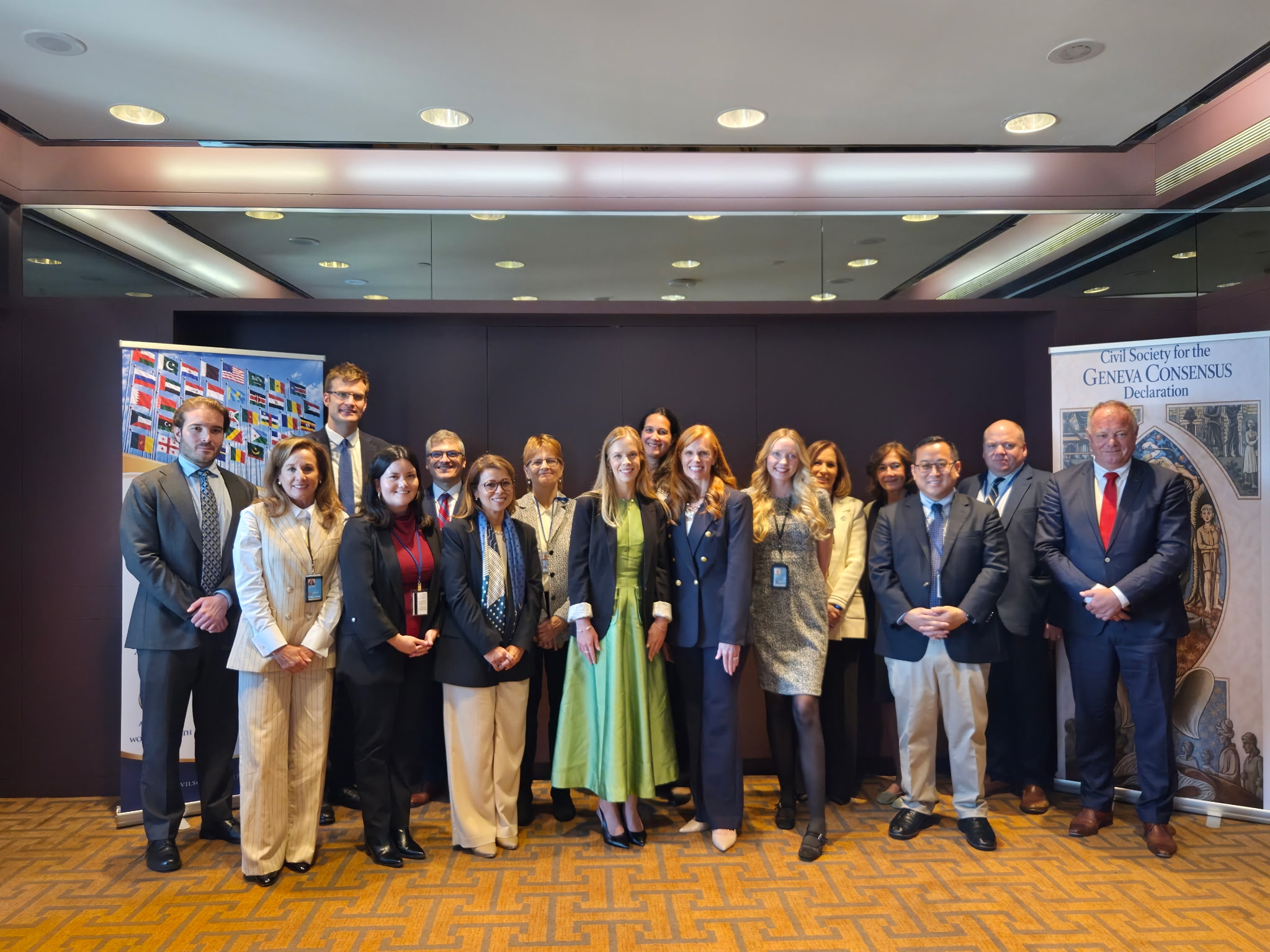
One of the most encouraging parts of the afternoon was hearing senior representatives of the United States government speak so openly about the protection of human life and the family. The United States returned to the Geneva Consensus Declaration in January 2025 and has since assumed the Secretariat from Hungary. The event included remarks from H.E. Dan Negrea of the U.S. Mission to the United Nations; Riley M. Barnes, Assistant Secretary of State for Democracy, Human Rights and Labor; Natalie Dodson, Senior Advisor in the Immediate Office of the Secretary at the U.S. Department of Health and Human Services; and Bethany Kozma, Director of the Secretary’s Office of Global Affairs and head of the GCD Secretariat. The event itself was organized in part to celebrate the United States assuming the Secretariat and to highlight the principles of the Declaration.
Barnes explained the four central objectives of the Declaration and emphasized the United States’ commitment to protecting life at all stages, supporting the family and promoting women’s health. He also highlighted something particularly important about the GCD: joining the Declaration does not require countries to surrender their sovereignty or change their national laws. Instead, it allows sovereign nations to cooperate internationally on principles they share.
Bethany Kozma’s remarks particularly stood out to me. Speaking about the role of the United States as the new Secretariat, she explained, “We’re not here to speak for sovereign nations. We are here to help sovereign nations speak together.” She spoke about the importance of GCD countries communicating with one another before UN negotiations rather than after them, recognizing when another member country is facing pressure and asking how they can support one another.
Kozma also acknowledged that the countries within the coalition do not agree on everything, and that they do not need to. “We do not have to agree on everything. We do not have to have identical cultures, identical laws or identical policies, but we can stand together on the principles we do share.” That was one of my biggest takeaways from the entire event. In international institutions, one country defending life and family can find itself isolated. A coalition of countries coordinating and supporting one another has a much stronger voice.
The location of the event made that message even more meaningful. We were sitting directly across the street from United Nations Headquarters during High-Level Week, when world leaders had gathered in New York and enormous international attention was focused on what was happening inside the UN. Kozma encouraged those in attendance to also pay attention to what was happening across the street: countries from different regions of the world were choosing to stand together on the principles they shared.
Representatives from several GCD countries demonstrated exactly what that cooperation can look like. Argentina, which recently joined the Geneva Consensus Declaration, was represented by Agustín Ezequiel Caulo, Secretary of Worship and Civilization. He spoke about Argentina’s commitment to principles including the protection of human life from conception and the importance of the family.
H.E. Ambassador Amr El-Sherbiny, Egypt’s Assistant Foreign Minister for Multilateral Affairs and International Security, spoke about Egypt’s longstanding efforts to defend the family within the United Nations system. He reflected on how dramatically the coalition has grown since its beginnings and welcomed renewed American leadership. One of his comments particularly struck me. Recalling his work with American civil society more than 15 years ago, he said he could never have imagined then seeing the United States where it is today on these issues. Now, he said, the United States has the opportunity to be “a force for good on the protection of the family.”
Hungary, which stewarded the GCD Secretariat before handing leadership to the United States, was represented by Fanni Pálházi-Nagy. She spoke about the importance of strong families amid economic uncertainty, demographic shifts and rapid social change, reminding those gathered that resilient families are the foundation of resilient nations. She also emphasized the important role of women and the need to support women and families together.
Perhaps the most exciting moment of the afternoon came when the Geneva Consensus Declaration grew even larger. Three new countries, Honduras, Algeria, and Trinidad and Tobago, signed onto the Declaration, joining the international coalition of nations standing together around the protection of life, women, the family and national sovereignty.
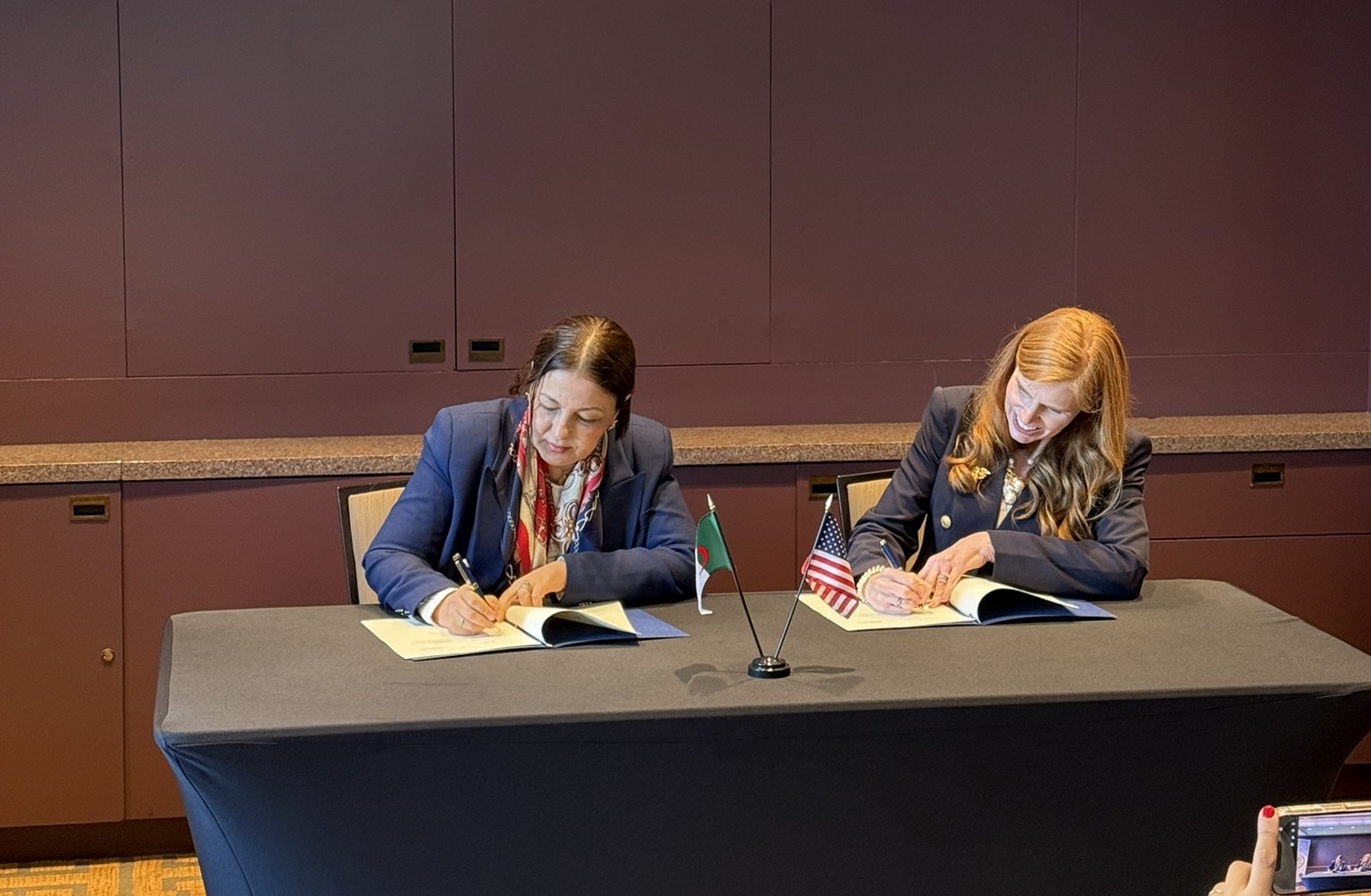
Watching three more countries add their names to the Declaration made the message we had been hearing throughout the afternoon tangible. This was not simply a gathering to talk about the importance of international cooperation. The coalition was actually growing before our eyes. Three countries from different parts of the world, each with its own culture, history and national laws, were choosing to join together around the principles they share.
Looking around that room, I was struck by just how international the movement to defend life and family truly is. The countries represented do not agree on every issue, and no one expects them to. But they can agree that human life deserves protection. They can agree that the family matters. They can agree that women deserve genuine health and support. And they can agree that abortion is not an international human right.
As a Canadian, that made the signing ceremony both incredibly encouraging and bittersweet. I had just watched three more countries join this growing international coalition, while my own country remains absent. I was sitting in a room listening to representatives from around the world openly defend principles that Campaign Life Coalition has fought for in Canada for decades, and I could not help thinking: Where is Canada?
Canada is not a member of the Geneva Consensus Declaration. While countries from around the world are working together to affirm the value of human life and resist attempts to establish abortion as an international right, Canada remains outside this growing coalition. It is difficult not to contrast Canada’s position with what I witnessed from our American neighbours.
The United States has not simply rejoined the Geneva Consensus Declaration. It has taken responsibility for its Secretariat and is actively working to help other countries coordinate their efforts in defence of life, women and the family. As a Canadian pro-life advocate, it was incredibly encouraging to witness that leadership firsthand.
I admire the willingness of the United States to use its influence on the international stage to defend principles that are increasingly treated as controversial within institutions like the United Nations: that unborn human life has value, that women deserve genuine healthcare and support, that the family is fundamental to society, and that sovereign countries should not be pressured into treating abortion as a human right.
I hope that one day Canada will join them. Imagine seeing the Canadian flag among the countries of the Geneva Consensus Declaration. Imagine a Canadian representative standing at an international gathering like this and affirming that there is no international right to abortion. Imagine Canada using its voice at the United Nations to defend unborn children and support countries that choose to protect life.
Right now, we are far from that reality. But sitting in that room also reminded me that change is possible. Governments change. Countries can change direction. Coalitions can grow. In fact, we witnessed that growth firsthand as three more nations joined the GCD that very afternoon. Principles that can sometimes feel almost impossible to defend within institutions like the United Nations are still being defended by nations around the world.
The Geneva Consensus Declaration concludes with a simple but powerful message: “Individually we are strong, but together we are stronger.”
After many trips to the United Nations where I have witnessed efforts to advance abortion internationally, it was refreshing to leave this gathering feeling hopeful about what can happen when countries choose instead to stand together for life.