



Behind the Agenda: What CSW70 Is Really Promoting
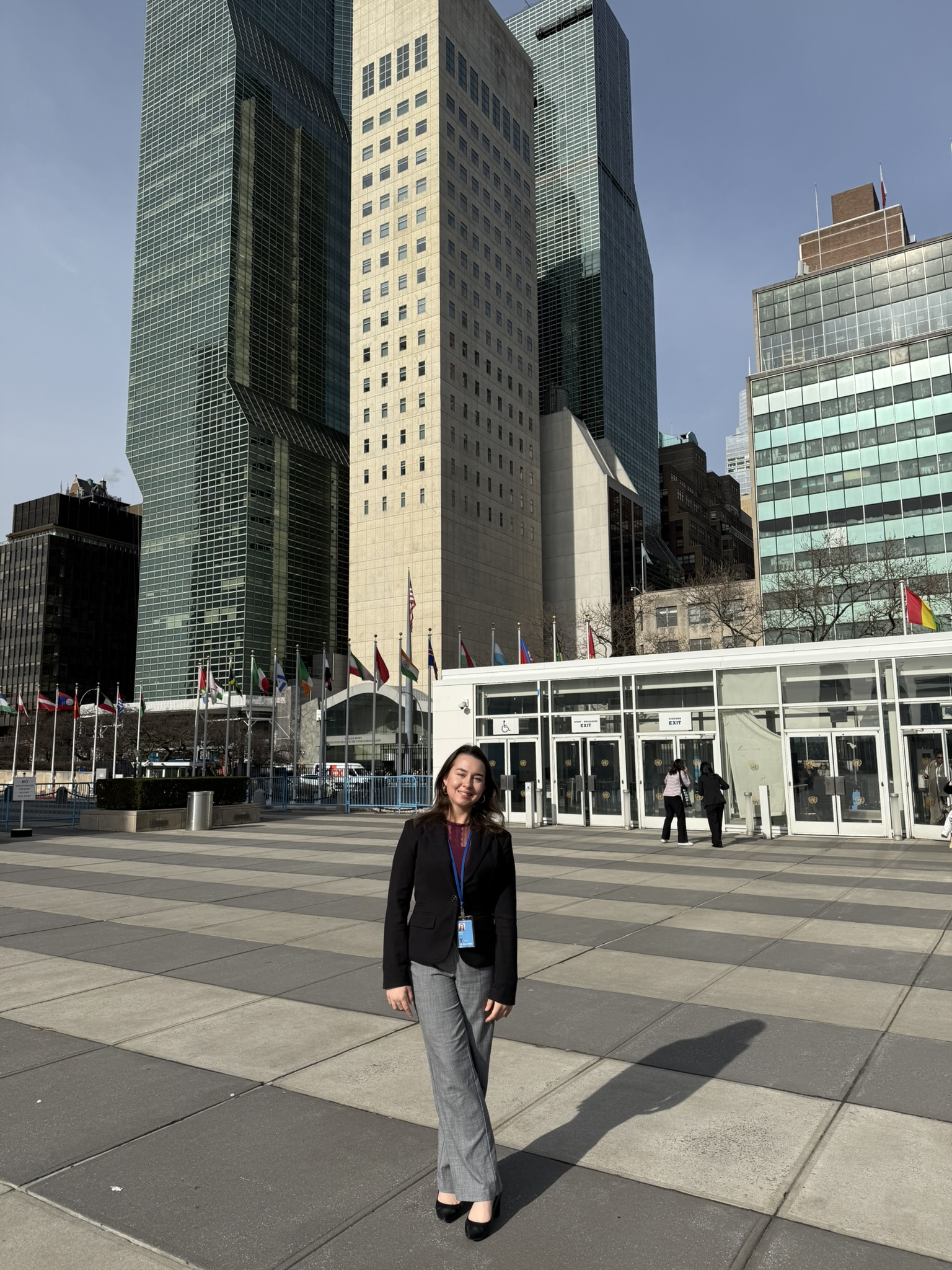
Last week, I had the privilege of joining friends of Campaign Life Coalition and Campagne Québec-Vie to advocate for the protection of life and family at the United Nations headquarters in New York City. The UN’s 70th Commission on the Status of Women (CSW) brought together thousands of people from across the globe to lobby ideas pertaining to women’s rights, women’s empowerment, the protection of women, and other related topics. In most cases, underlying these broad aims were aggressive campaigns to increase access to abortion, further gender ideology and the sexualization of children, and dismantle the family unit.
Though the UN is among the world’s strongest forums, the voices of pro-life, pro-family proponents are often stifled. Only a handful of NGOs openly advocate for these ideals, and they are frequently labelled as “anti-rights” ideologies.
On my last day participating in the first week of CSW, some of my colleagues and I brought a pro-life presence to an event supporting radical feminism, particularly regarding bodily autonomy. In these contexts, “bodily autonomy” typically includes access to abortion at any term, acceptance of limitless gender-transitioning approaches, and a push to give comprehensive sexuality education to children.
At the beginning of the parallel event, organizers declared that the “safe space” they created values the rights of LGBTI individuals and “the right to full bodily autonomy”, including abortion, and asked those who do not respect their values to leave. No one did.
Before a space for discussion amongst participants was opened, the organizers asked Crystal from ILGA to speak; a woman who described herself as intersex. As a young teenager, Crystal explained that her bodily autonomy was stripped from her when doctors coerced her mother into agreeing to subject Crystal to a substantial medical procedure, regardless of her own views on the matter. Trauma from this situation and others relating to being “an intersex woman” tormented her through her teens and her twenties. Crystal recounted the extreme shame, fear, and self-hatred she experienced due to feeling out of place in accordance with society’s expectation of what it meant to be a woman.
Crystal’s story broke the hearts of many of us in that room. Her pain cut deep and overtook much of her younger life. What struck me most of all was that she implied that embracing her own intersexuality and choosing to create her own ‘normal’ gave her a new identity free from trauma, fear, shame, and self-hatred. Yet, it’s as though I could hear the lingering pain in her voice and feel it emanating off of her.
She clung to what she perceived as freedom in an ideology of gender theory and full bodily autonomy, but she clearly was searching for more – needing something more.
So often, there are broken people who profess to have found meaning in distorted systems of belief, even if they are not content with it alone in the end. They may tell themselves that they have found fulfillment because they don’t believe that there can be something more, or at least haven’t found it: true freedom, and true healing.
This experience reminded me that the loudest proponents of perverted beliefs, even at the United Nations, are sometimes people who have been hurt and are in need of a Saviour. Rather than looking to Jesus Christ, they devote themselves to an ideology from which they may have perceived a glimpse of meaning or purpose.
It can be easy to approach dialogue with others in politically tense spaces as though one is talking to an ideology rather than a person. Though it is necessary to confront perversion and speak the truth unapologetically, we must not forget that Jesus Christ died to save those people, too. Behind the mask of their belief system, there may be a broken person in need of saving.
In all of our speaking truth and combatting lies, we cannot forget to have love and compassion for the person that we converse with. After all, that person is still made in God’s image. We never know what influence even a brief interaction may have in turning a person closer to or further from God.
My perspective changed after that event. Though many of the ideas praised were immoral and corrupt, I walked out feeling the heaviness of the pain and darkness present in that room. It created in me a sense of compassion for some of the people there – particularly Crystal. My only regret is that I didn’t have an opportunity to ask Crystal if I could pray for her. She had left before I could.
It is critical to maintain pro-life, pro-family voices at the United Nations; yet, we must not forget that the battle we fight there is highly spiritual. Thus, our fight must be founded in prayer and trust that victory ultimately belongs to and comes through Jesus. When we go to the UN, we do not struggle alone, for God is with us.